
What is a backwater valve? It is a one-way valve on the sewer line that carries wastewater out of your house. Waste leaves normally, and if the sewer pushes back, a flap or gate closes so the backup cannot reach your basement.
Whether your home needs one is a different question, and the honest answer is not always yes. It depends mostly on where your water came from, if you have had any at all. A valve that is the right answer for one basement does nothing for the house next door.
How a backwater valve works
Your toilets, sinks, showers, appliances and basement floor drain all connect to the sanitary sewer. In a normal week, everything flows one way: out of the house and down to the main in the street.
Heavy rain or a fast snowmelt can overload the system. When that happens, wastewater can be forced back along the line and out of the nearest low opening, which is usually a floor drain, a basement toilet or a shower. That is a sewer backup, and what comes up is raw sewage.
The valve sits on the line between your fixtures and the street, and there are two basic designs:
- Normally open. The flap or gate stays open so wastewater can leave, and it closes when backflow is detected.
- Normally closed. It stays shut and only opens in one direction, when wastewater is on its way out.
The type affects where the valve can go in your plumbing, so it should be chosen for your layout rather than picked off a shelf. Position matters as much as the model. Any fixture that joins the line on the street side of the valve is not protected by it.
What a backwater valve will not do
It only deals with water coming back up the sewer line. Durham Region lists many other causes of basement flooding, and a valve does not fix any of these:
- leaks through the foundation, basement walls, windows or doors
- poor lot drainage, overflowing eavestroughs or plugged downspouts
- a failed weeping tile system or a failed sump pump
- a blocked connection between your home and the main in the street
If the water came through a wall or up through the slab and looked clear, you are probably dealing with groundwater, and the likely answer is better drainage or sump pump installation.
Some homes have both problems, and the two can interact. If your weeping tile drains into the sewer line ahead of the valve, that water has nowhere to go once the valve closes. This is why a plumbing inspection should come before the valve rather than after it.
Does your home need one?
Here is how we would think about it.
Water has come up out of a floor drain. This is the clearest case, especially if it smelled of sewage and happened during heavy rain or a melt. Nothing about the sewer has changed, so expect it to happen again the next time the system is overloaded. A smell without any water is less clear-cut, because it has several other causes. Our guide to sewer smell in the basement goes through them.
You have an older home and a finished basement, and it has never flooded. Worth a conversation, not an automatic yes. The Government of Canada points to homes on older municipal sewers as a group that should look at this, and it puts the average cost of repairing a flooded basement at over $40,000. Still, a valve means opening your floor, so let an inspection tell you how real the risk is before you decide.
Your home is fairly new. You may already have one. Many municipalities require them in new homes, and the Government of Canada says a valve is possible in any home built within the last 20 to 30 years. Look for an access cover set flush into the basement floor, often with a clear top on the valve inside.
Water only ever came through the walls. Then a valve is probably not the fix, and you should not pay for one until someone has found where the water is really coming from.
What installation involves
This is not a weekend project. Government of Canada guidance is that a licensed plumbing professional should do the work, and it normally goes like this:
- Inspect the plumbing to find what caused any past backups and confirm a valve will actually help.
- Get the municipal permit before work starts.
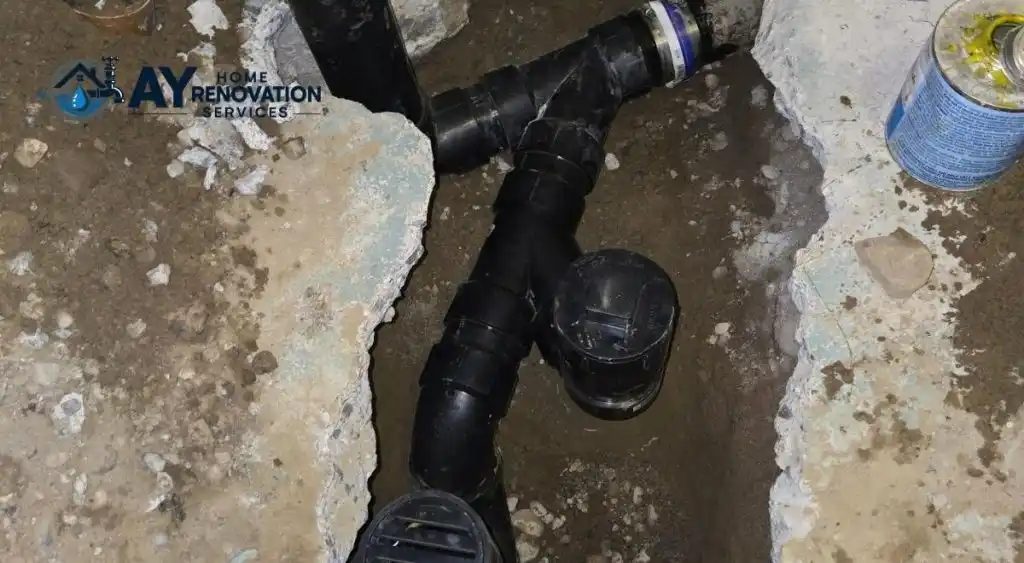
- Break up part of the basement floor and expose the sewer line.
- Cut in the valve and fit an access box flush with the floor, so the valve can be reached later.
- Seal around the installation and have the work inspected.
We handle backwater valve installation in Pickering and start by working out where your main line runs and what connects to it. The cost depends on that layout, how much floor has to open and what is on top of it, so we would rather look at it than guess over the phone.
While you are planning, call your insurance broker as well. Sewer backup is often an add-on rather than part of a standard policy, and plenty of people only find that out when they claim.
Living with a backwater valve
A valve is not something you install and forget. It has moving parts in a pipe that carries grease and debris, and a flap that cannot move will not protect anything.
The Government of Canada’s backwater valve guidance recommends having a plumber inspect and maintain it, at least once a year in the spring for some types. If you do the cleaning yourself, follow your valve’s manual. In general, that means wearing gloves and safety glasses, opening the access box and the cleanout cap, flushing with hot, soapy water, and checking that the flap moves freely. Then tighten the cap properly. A valve can fail if that cap is loose.
The other thing owners need to know is the self-flood. While the valve is closed, your own wastewater cannot get out either. Run a load of laundry or a long shower during a storm, and that water can come back up inside your own basement. So during heavy rain, go easy on anything that uses a lot of water. An alarm that tells you the valve has closed is worth asking about for this reason.
Help with the cost in Durham Region
Durham Region runs a Basement Flooding Loan Program. It is a loan, not a rebate, and it is only for homes that have already had a problem. It is not available as a precaution.
According to the notice on the Region’s basement flooding page:
- It is a one-time, interest-free loan of up to $3,000, repaid in equal amounts on your quarterly water and sewer bill over no more than 3 years.
- It is for owners of existing residential homes that have had basement flooding from a sanitary sewer backup.
- It covers labour and materials for an approved backwater valve and a sump pump.
- You need a permit from your local municipality, a licensed plumber and a final plumbing inspection.
- You apply afterwards with original invoices and proof of payment, so you pay for the work first.
That notice is dated 2009, and it names a specific approved valve. Call the Region to confirm the current terms and which valve it accepts before any work starts. The City of Toronto subsidy that shows up in most searches does not apply in Durham.
If you have just had a backup, report it to the Region’s Works Department and keep your photos, receipts and any insurance paperwork. The loan application asks about all of it.
If it is happening right now
Stay out of the water if it is anywhere near outlets, appliances or your electrical panel. Stop using water in the house, because everything you send down the drain can make it worse. Take photos before you clean up, call your insurer, and report it to the Region. Sewage is a health risk, so wear gloves and boots if you have to go near it, and consider professional cleanup. For the plumbing side, we answer around the clock on 647-248-7755.
Getting a straight answer
If water has come up through a drain, a backwater valve is very likely worth it. If you are not sure what happened, tell us where the water appeared, what it looked like and whether it was raining, and we can usually narrow it down.
Our experienced team covers Pickering, Ajax and Whitby. Call 647-248-7755 to talk through getting a backwater valve installed, or to find out whether you need one at all.