

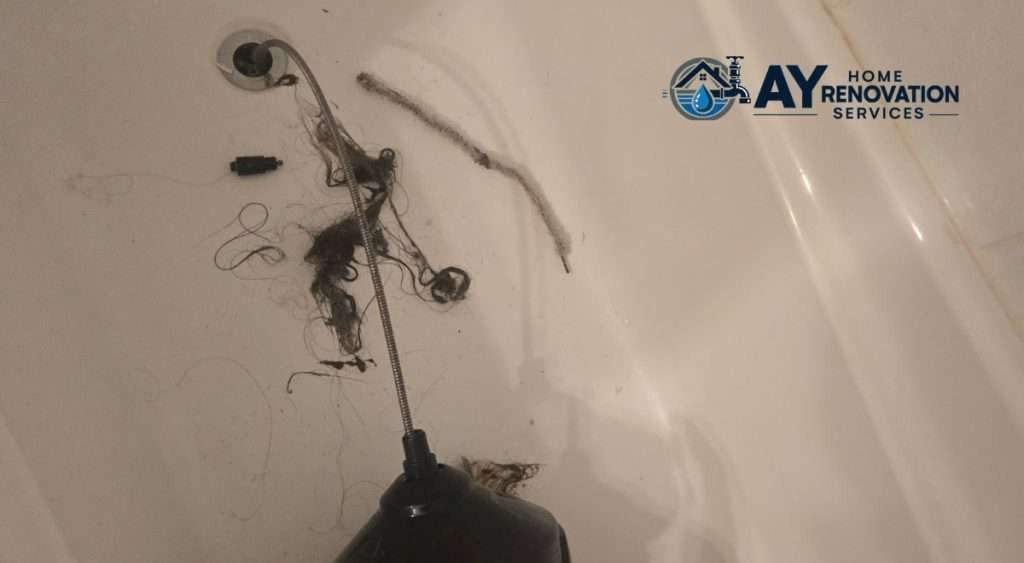
A shower that drains slowly is one of those problems that gets worse so gradually nobody notices the day it started. First there is a puddle around your feet by the end of a long shower. Then it is ankle deep. Then it is standing there twenty minutes after you have finished.
Almost always the cause is the same thing, and it is not complicated. It is hair bound together with soap scum.
Hair on its own would mostly wash through. Soap is what turns it into a blockage. Traditional bar soaps contain fats that react with the minerals in the water and leave a sticky, waxy residue on the pipe wall. Hair catches on that residue instead of passing, and each strand gives the next one something to catch on. Add the conditioner, skin cells and shaving debris that go down with it, and what forms is a dense mat sitting just below the drain opening.
The useful part of that: the blockage is usually within the first ten to fifteen centimetres of the drain. You do not need to reach far to get it.
Get the cover off first
Everything below assumes you can see down the drain, and shower covers come in a few varieties.
Some lift straight out. Some have a visible screw in the centre. Some are the push-and-twist type that turns a quarter turn and releases. Some older ones are held by two screws under a decorative cap.
If it looks screwless and will not lift, try turning it counterclockwise before you start prying. Prying a twist-type cover is how people bend them.
Give the underside of the cover a clean while it is off. There is usually more buildup on it than expected, and a partially clogged cover alone can slow a shower noticeably.
Pull it out rather than dissolve it
The fastest fix for the standard hair clog is mechanical, and it takes about two minutes.
A plastic drain claw is the tool for this. It is a thin flexible strip with barbs along its length, it costs very little, and it is available in any hardware shop. Push it down until it stops, twist it, and pull it back up slowly. What comes out is unpleasant. It is also the entire blockage in most cases.
Go back down two or three more times, because the first pull usually gets the top of the mat and leaves the rest.
Needle nose pliers work for anything sitting right at the top and visible.
A bent wire coat hanger is the improvised version. It works, but form a small hook on the end and be careful not to push the mass further down, which is the classic mistake. You want to hook and pull, not poke.
After that, run hot water for a minute or two to flush the loosened residue behind it.
If the drain claw was not enough
Then the blockage is deeper than the trap or it is not hair at all.
Try a plunger. A cup plunger over the drain opening with enough water in the base to cover the rim. Same principle as anywhere else, short strong strokes with the seal maintained. A shower trap is shallower than a sink trap, so plunging tends to be more effective here than people expect.
Then a hand auger. A small drum auger fed down the drain, turning as it goes. Push gently through the trap bend rather than forcing it. When you feel it catch, work it back and forth, then withdraw slowly. On a hair clog you are aiming to pull the mass back out rather than shove it along.
The boiling water step is a limited one. It can help soften soap scum in a slow drain, and it does nothing at all on a fully blocked one. On a plastic waste it is also worth being moderate with, since sustained heat softens PVC and the joints are the weak point. Hot tap water run for a few minutes is safer and nearly as useful.
Two things worth knowing about chemicals
The first is that chemical drain cleaners are aimed at organic matter, and hair is organic, so they do make progress on a hair clog. What they are poor at is soap scum bound into a dense mat, which is the actual structure of most shower blockages. That is why people often report it working partially and the drain slowing again a week later.
The second is that a shower drain is a place where standing water sits directly above the blockage, which is the worst case for chemical use. It cannot travel to the obstruction and it stays in contact with your pipework instead.
There is more detail on that in whether chemical drain cleaner is safe for pipes. For showers specifically, the drain claw is faster, cheaper and better suited to the material you are actually removing.
Keeping it from coming back
Shower drains block again because the cause never stops. Hair keeps going down. The fix is to intercept it.
A hair catcher over the drain is the single most effective thing available. A silicone or stainless mesh cover that sits over the opening catches nearly everything, and emptying it takes a few seconds. This one change prevents the majority of repeat blockages.
Switch to a liquid body wash if you keep having trouble. Bar soap is what produces the scum that binds the hair together. Liquid washes generally do not leave the same residue. That is a small change with a real effect on a drain that clogs repeatedly.
Flush the drain with hot water weekly, or with an enzyme drain product monthly if it is a persistent problem. Enzyme products are slow and useless on an existing full blockage, but as maintenance on a drain that tends to slow they are genuinely effective and they do not harm pipework.
Brush out long hair before showering rather than letting it come out under the water. Not glamorous advice, but it meaningfully reduces what goes down.
The signs it is not just hair
Most slow showers are a simple clog. A few are telling you something else, and these are the ones worth acting on rather than clearing again.
Other fixtures are affected too. If the shower is slow and the toilet gurgles or a sink backs up, the problem is in the shared line, not in your shower trap.
Water comes up rather than going down. Water rising into the shower tray when you run another fixture, or a washing machine draining, points at a restriction downstream.
A persistent smell along with the slow drain. A smell can indicate a dry or damaged trap or a venting fault rather than a blockage. That is a different repair.
It blocks again within weeks, every time. Once is a clog. Repeatedly, despite a hair catcher, usually means the waste pipe has poor fall, a sag holding water, or a partial obstruction further along that keeps catching new material.
You have cleared it and the water still pools in the tray. Sometimes the drain is fine and the tray itself has settled or was never set with enough slope. That is a tray problem rather than a plumbing one.
When to hand it over
If the auger will not pass, if more than one fixture is affected, if water backs up from elsewhere, or if the drain has started blocking on a cycle, it is worth having someone look at the pipe rather than clearing it again.
The same applies if the drain assembly itself is leaking, if the trap is cracked, or if clearing it means getting behind a tiled wall. Those turn into shower repair and installation work rather than a drain clearing job, and it is better to know which one you are dealing with before anything comes apart.
We covered the wider set of shower faults, including pressure and temperature problems, in common shower plumbing problems.
If a shower keeps blocking no matter what you catch at the drain, call 647-248-7755 and describe what the rest of the house is doing when it happens. That is usually the detail that identifies it.